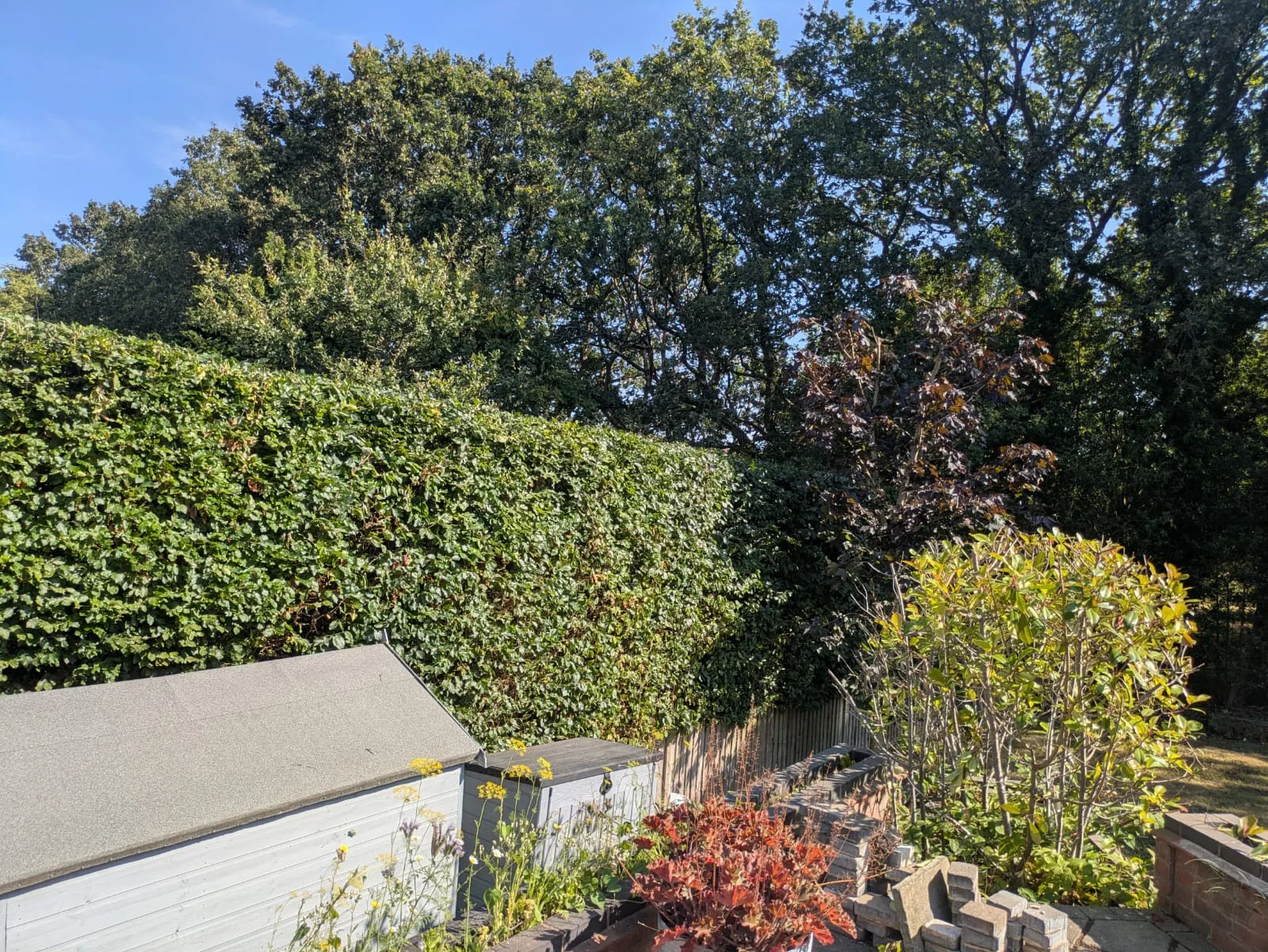
Most garden hedges benefit from a trim once or twice a year, while fast-growing hedges need more frequent attention. Regular trimming keeps a hedge healthy, dense and the size you want. Overgrown hedges can usually be reshaped with a harder reduction, and it is important to check for nesting birds before cutting in the season.
A well-kept hedge does a lot of work in a garden. It frames the space, gives you privacy and shelter, marks a boundary, and provides valuable cover for birds and wildlife. But a hedge is a living thing, and it needs the right care at the right time to stay dense, healthy and the shape you want. This guide covers how often different hedges need cutting, how to shape a young hedge and keep an established one tidy, how to bring an overgrown one back under control, and the seasonal points to watch out for, including nesting birds.
How Often to Cut a Hedge
There is no single answer that fits every hedge. How often yours needs cutting depends on the type of hedge, its size, and how quickly it grows.
- Most formal garden hedges: A trim once or twice a year is usually enough to keep them neat and dense. Once a year suits slower growers, while a second cut keeps a crisp, formal shape.
- Fast-growing hedges: Vigorous varieties such as some conifers and privet put on a lot of growth and may need cutting two or three times over the growing season to stay under control.
- Informal and flowering hedges: These are often cut just once a year, usually after they have flowered, so you keep the display without sacrificing the shape.
- Native and wildlife hedges: These can be cut less often, sometimes every couple of years, which is better for the birds and wildlife they support.
Regular trimming is the single best thing you can do for a hedge. It keeps growth dense right down to the base, holds the size you want, and stops the hedge getting away from you and needing a hard reduction later on.
Formative and Maintenance Trimming
It helps to think of hedge cutting in two stages, because a young hedge and an established one need different things.
- Formative trimming: In the first few years of a new hedge, the aim is to build a strong, well-shaped framework. That means trimming the sides and encouraging the plant to bush out and thicken, rather than just racing upwards. Get the shape right early and the hedge will be dense and healthy for the rest of its life.
- Maintenance trimming: Once a hedge has reached the size you want, the job changes to keeping it there. Regular light cuts hold the shape, keep the surface neat, and maintain dense growth. A slight batter, where the hedge is a little wider at the base than the top, lets light reach the bottom so it does not go bare and thin low down.
Whichever stage your hedge is at, clean, sharp cuts and an even shape make all the difference to how it looks and how well it grows.
Hedges Getting Out of Hand?
Buxton Tree Care trims and reshapes hedges of all sizes across Buxton and the High Peak. Fill in our quick form and we'll get back to you fast with a free, no-obligation quote.
Request a Free QuoteBringing an Overgrown Hedge Back
If a hedge has been left too long, it can grow tall, wide and bare in the middle. The good news is that most overgrown hedges can be brought back under control with a careful, harder reduction.
- Reduce it in stages where needed: Many deciduous hedges, such as hawthorn, beech and hornbeam, respond well to a hard cut. Others, particularly most conifers, will not regrow from old bare wood, so a hedge like that has limits on how far back it can be taken. Knowing which is which matters, and it is where honest advice is worth having before any big cut is made.
- Do the hard work at the right time: A heavy reduction is usually best done in the dormant season so the hedge can recover strongly when growth returns, though the species and situation always guide the timing.
- Then set a routine: Once a hedge has been reshaped, keeping it under control is far easier. A simple trimming routine from that point on stops it ever getting out of hand again.
We regularly bring neglected and overgrown hedges back to a clean, healthy line across the High Peak, reshaping them without stressing the plant and clearing away every clipping when we finish.
Feeding and Hedge Health
A healthy hedge is far easier to keep looking good, and a little care beyond cutting goes a long way.
- Feed if growth is weak: Hedges take a lot out of the soil. A balanced feed in spring helps a tired or slow hedge put on strong, dense growth, which is especially worthwhile after a hard reduction.
- Mulch and water: A mulch around the base helps hold moisture and keeps weeds down. Young and newly cut-back hedges in particular benefit from watering through dry spells while they re-establish.
- Watch for problems: Bare patches, browning, or dieback can point to disease, pests or drought stress. Catching it early makes it much easier to put right.
- Keep the base clear: Clearing weeds and heavy growth from the foot of the hedge reduces competition and helps air move around the plant, which keeps it healthier.
Nesting Birds: Check Before You Cut
This is important, and it is easy to overlook. Hedges are a favourite nesting spot for birds, and wild birds, their nests and their eggs are protected by law. Nesting season generally runs from around March to August, though it can start earlier or run later depending on the weather.
- Check carefully before any cut in season: Always look through the hedge for active nests before starting work during nesting season. It only takes a few minutes and it matters.
- Hold off where there are active nests: If a nest is in use, the sensible and responsible thing to do is to leave that section alone until the young have fledged.
- Plan bigger jobs around the season: Where you can, major hedge work is best kept to the autumn and winter months, outside the main nesting period.
We always check hedges before cutting during the season and will happily plan the work around nesting birds where needed. It is a small thing that makes a real difference to local wildlife.
When to Call a Professional
Trimming a low, easily reached garden hedge is a job many people happily do themselves. There are times, though, when it is worth bringing in a professional.
- Tall and boundary hedges: Anything that needs a ladder or working at height is where accidents happen. Tall hedges are safer and neater in the hands of someone with the right equipment.
- Overgrown reductions: Bringing a badly overgrown hedge back needs judgement about how hard to cut and whether the species will recover, as well as the equipment to shift a lot of material.
- Long or thick hedges: A large amount of hedge, or thick woody growth, is heavy, time-consuming work and generates a lot of arisings to clear.
- When you want a clean, even finish: A crisp, level hedge takes a practised eye and the right kit, and it makes all the difference to how a garden looks.
Buxton Tree Care cuts and reshapes hedges of all shapes and sizes across Buxton and the High Peak, from routine trims to overgrown reductions, and we take away every clipping so you are left with nothing to tidy up.
Frequently Asked Questions
It depends on the type of hedge, its size and how fast it grows. Most formal garden hedges are happy with a trim once or twice a year, while fast-growing varieties may need cutting two or three times over the growing season. Informal and native hedges can often be cut less often.
Routine maintenance trims are usually done through late spring and summer once growth is underway, while harder reductions on overgrown hedges are best kept to the dormant autumn and winter months. Whenever you cut during nesting season, from around March to August, always check for active nests first.
Usually, yes. Many deciduous hedges such as hawthorn, beech and hornbeam respond well to a harder reduction and will regrow. Most conifers, however, will not regrow from old bare wood, so there are limits on how far they can be cut back. We assess the hedge first and advise honestly on what is possible.
Bare, thin growth at the base is usually a sign the bottom is not getting enough light. Trimming the hedge so it is slightly wider at the base than the top, known as a batter, lets light reach the lower growth. Regular trimming, feeding a weak hedge, and keeping the base clear of weeds all help keep it dense.
Yes. Wild birds, their nests and eggs are protected by law, and hedges are a common nesting spot. During nesting season, roughly March to August, always check for active nests before cutting and leave any occupied section until the young have fledged. Where possible, plan bigger hedge jobs for the autumn and winter.
Yes. Clearing up is part of the job, not an extra. All clippings and trimmings are collected and taken away, so you are left with a crisp, tidy hedge and nothing to clear up yourself.